
Is Your PPE Compatible?
PPE compatibility is not a new legal requirement, but recent industry guidance and the growing use of hearing-protection fit testing are putting renewed focus on whether different items of PPE work effectively together.
When employees wear more than one item of personal protective equipment, each product must remain effective when used alongside the others.
Under Regulation 5 of the Personal Protective Equipment at Work Regulations 1992, PPE worn at the same time must be compatible and continue to protect against the risks involved.
Why compatibility matters
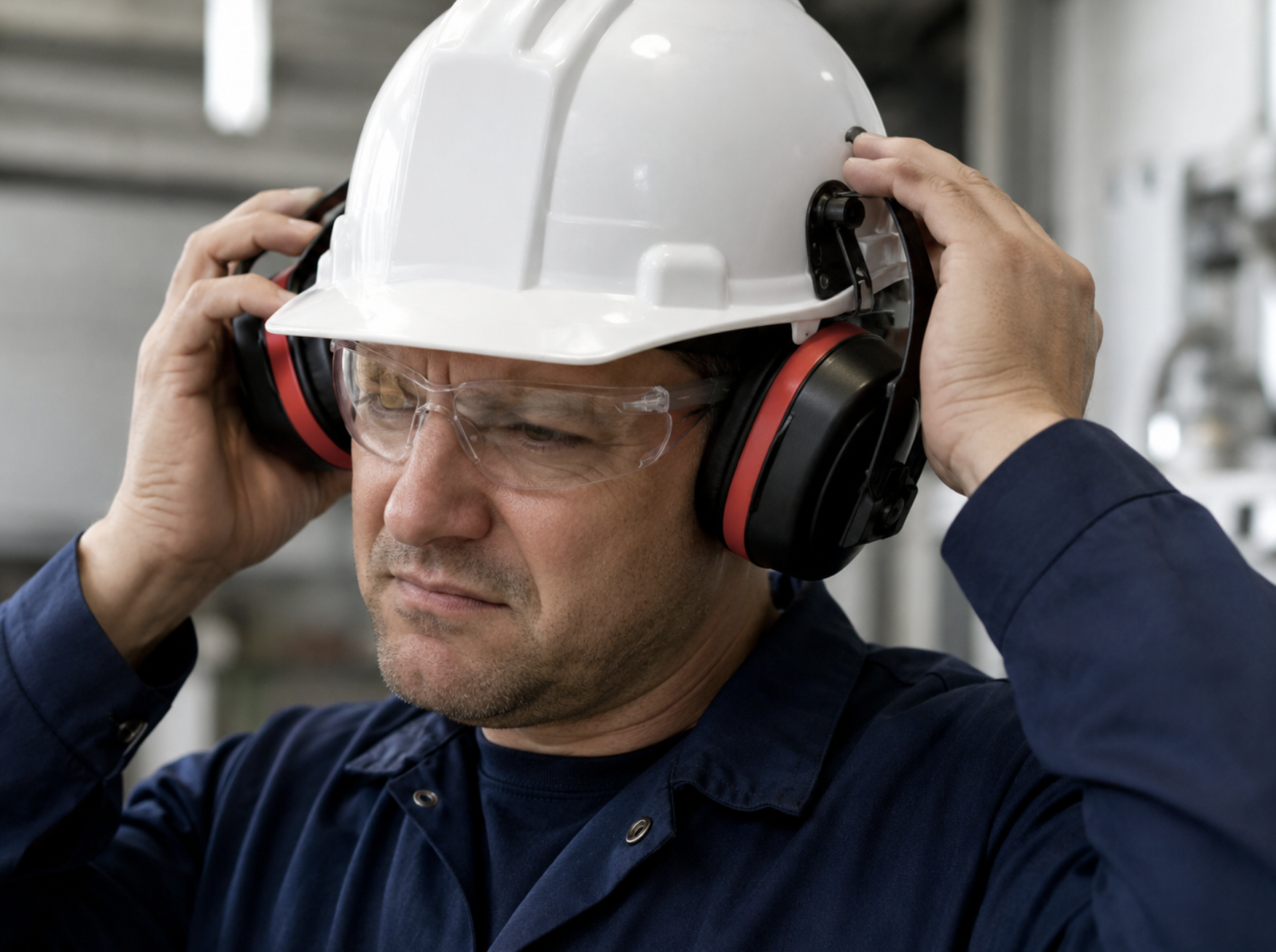
Hearing protection can perform well on its own but become less effective when combined with other equipment.
A product may be correctly certified and suitable for a particular risk, but that does not automatically mean it will work effectively with every helmet, pair of safety glasses, face shield or item of communication equipment.
This means employers need to consider not only whether hearing protection is suitable on paper, but whether it continues to fit and protect properly when worn as part of the full PPE setup.
When hearing protection does not work with other equipment
| PPE Combination | What can go wrong | Why it matters |
|---|---|---|
| Earmuffs + safety glasses | Spectacle arms can break the cushion seal. | The wearer may receive less hearing protection than expected. |
| Earmuffs + hard hats | The earmuffs may not sit or attach correctly. | Fit, comfort and attenuation may be reduced. |
| Earmuffs + face shields or welding helmets | Headbands, mounts and fittings can compete for space. | One item may displace another or prevent a secure fit. |
| Hearing protection + communication equipment | Separate headsets, earpieces or radio accessories may interfere with fit, or encourage workers to remove their hearing protection to hear messages. | Protection can become inconsistent, while an integrated solution can support communication without removing the hearing protection. |
The issue is not simply whether each product is certified. Employers must also consider whether the hearing protection continues to fit correctly and provide the intended protection when worn with the rest of the worker’s equipment.
ProtectHear custom-moulded earplugs have you covered
Our moulded earplugs sit within the ear and do not rely on a headband, helmet attachment or cushion around the outside of the ear.
This can reduce some of the physical conflicts associated with earmuffs when workers also wear safety helmets, spectacles, goggles, face shields, welding helmets or other head-worn equipment.

Communication is another important consideration. In noisy environments, workers may move or remove their hearing protection to hear radio messages, leaving them temporarily unprotected.
ProtectHear’s custom-moulded earplugs already enable users to hear speech and warning signals. Our SpeakHear communication solution takes this further by allowing compatible radio accessories to be fitted directly to the earplugs. This helps workers stay connected while keeping their hearing protection correctly fitted.
Protection and communication — designed to work together.
Choosing hearing protection is therefore not just about attenuation; it is also about how well it works alongside the other equipment. Custom-moulded earplugs offer a practical advantage because their low-profile design reduces interference with other vital PPE.
The key message is simple: PPE should be treated as a system, not as a collection of separate products.
Further reading
HSE: Selecting and using PPE
https://www.hse.gov.uk/ppe/selection-and-use.htm
PPE at Work Regulations 1992, Regulation 5
https://www.legislation.gov.uk/uksi/1992/2966/regulation/5